Background
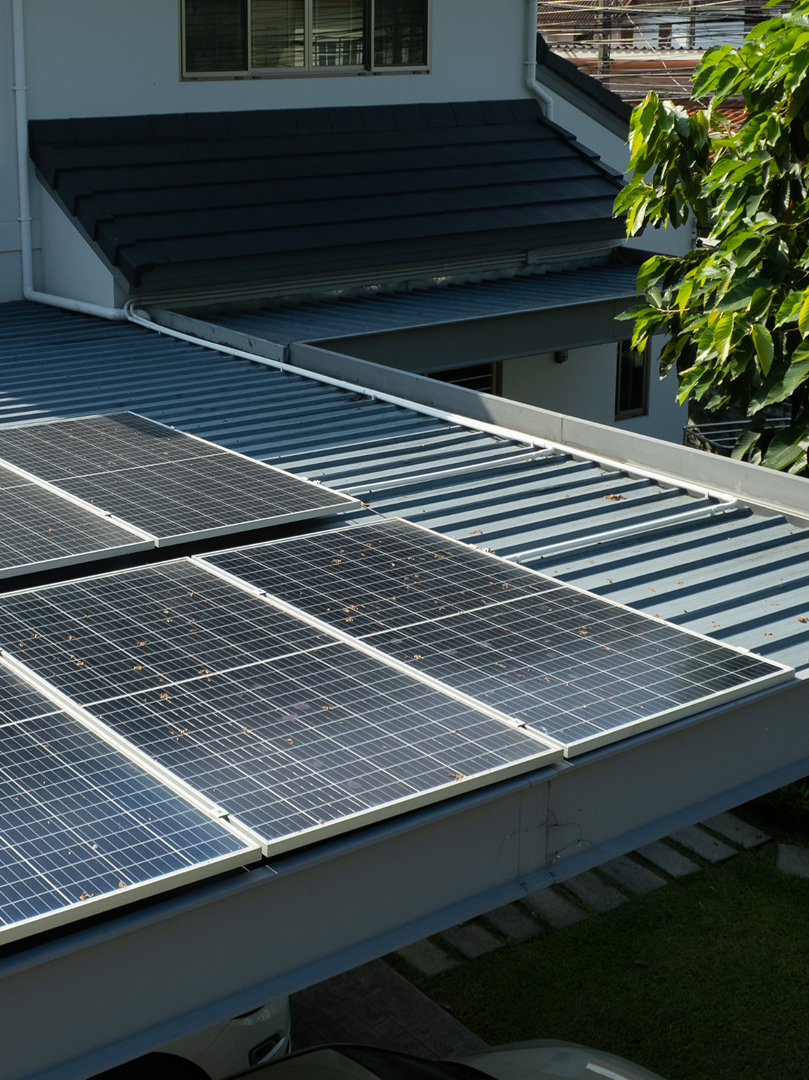
Andres Reyes installed a 5kW rooftop solar system on his home in Cebu City in late 2024 — a decision driven by rising electricity bills and a long-term desire to reduce his household’s carbon footprint. The installation cost approximately ₱290,000 and was financed over five years.
Under the standard NET metering arrangement with his distribution utility, Reyes’s system exported surplus daytime generation back to the grid. The credit rate, however, was disappointingly low — roughly ₱5.60 per kWh exported, compared to the ₱11.40 per kWh he paid when drawing from the grid. His system was generating value, but barely half of what it cost to consume the same energy.
“I knew the NET metering rate wasn’t great,” Reyes recalls. “But I thought the self-consumption savings would carry it. The problem is my family isn’t home during peak generation hours — I was exporting most of the good solar hours for almost nothing.”
The Challenge
Reyes’s situation is common among residential solar owners in the Philippines. Most rooftop solar systems are sized to cover a household’s total daily consumption — but consumption patterns don’t align with generation curves. Daytime generation peaks between 10am and 2pm; household consumption peaks in the evening. The result: significant surplus generation during off-peak household hours that gets exported at the distribution utility’s low NET metering buyback rate.
For Reyes, the gap was material. His system was generating approximately 22–25 kWh per day, but his household only consumed around 18–19 kWh. The ~3–4 kWh daily surplus — roughly 90–120 kWh per month — was being credited at rates that made the system’s financial case significantly weaker than his original projections.
His 5-year payback projection had stretched to nearly 8 years under real-world conditions.
The SunShare Solution
SunShare’s prosumer program allows solar owners to direct their surplus generation into the aggregation network rather than back to the grid at NET metering rates. The surplus is consumed by other SunShare members in the aggregation pool, and Reyes receives credits against his own supply charges at a rate that reflects the network’s negotiated generation price — meaningfully higher than the utility NET metering rate.
The enrollment process was straightforward:
- System assessment — SunShare reviewed Reyes’s generation data and consumption profile to calculate his average surplus and projected credit earnings
- Prosumer agreement — A simple addendum to the standard SunShare membership agreement covering the surplus contribution terms
- Utility coordination — SunShare coordinated with VECO (Visayas Electric Company) to adjust the metering and credit arrangement
- Dashboard activation — Reyes received a prosumer dashboard showing real-time generation, self-consumption, surplus exported to the network, and monthly credit totals
The entire transition took 18 days.
Results
In the four months since joining SunShare as a prosumer:
- Monthly credits averaging ₱2,100 from surplus contribution (compared to ₱980 under the previous NET metering arrangement)
- System payback period revised from ~8 years back to approximately 5.9 years — close to the original projection
- Total effective ROI improvement of approximately 34% over the system’s lifetime
- Reyes now has full visibility into generation vs. consumption vs. export — something he never had with basic NET metering
“The dashboard alone was worth it,” says Reyes. “I finally understand what my system is actually doing. And the credits make a real difference — it’s like the system is working twice as hard.”
What’s Next
Reyes is evaluating battery storage as a Phase III addition. With SunShare’s generation data establishing clear peak surplus times, the storage sizing decision is now data-driven rather than estimated.
He’s also become an informal advocate in his neighborhood. “Three of my neighbors are now asking about SunShare,” he says. “I show them the numbers and they ask why they didn’t do this sooner.”